Before Your First RC Helicopter Flight: A Pilot’s Checklist
Beautiful machines, delicate controls. A practical guide to the first flights you will actually remember.
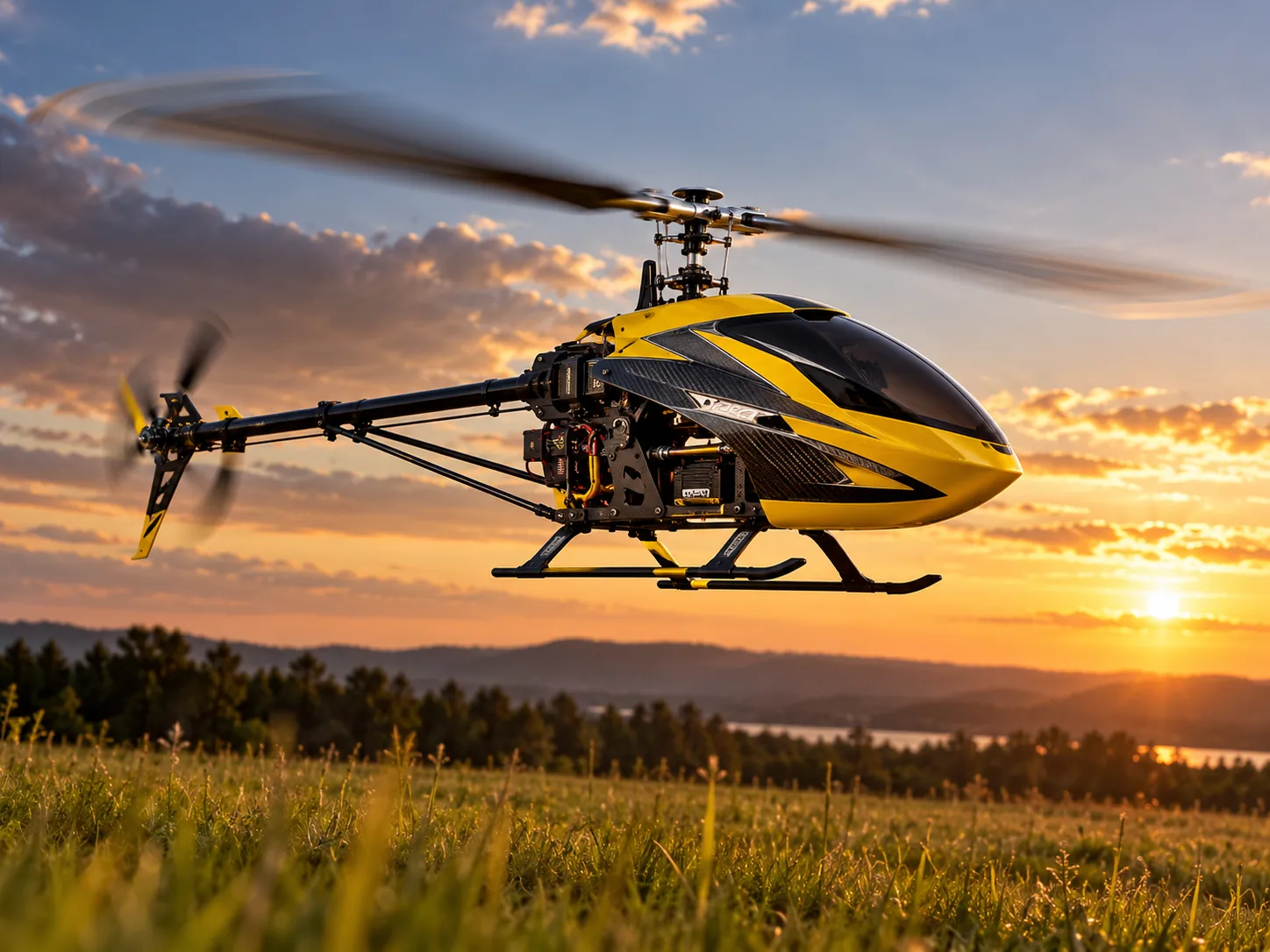 ILLUSTRATIVE EDITORIAL ARTWORK / NOT HANDS-ON TEST FOOTAGE
A helicopter suspended in the golden light looks effortless. Learning to hover is anything but. Beginners usually improve fastest when they reduce variables: a suitable machine, low wind, a clear area and simple objectives.
No buying guide can replace manufacturer instructions, flight club coaching or local aviation rules. Use this as a preflight mindset—not an operational manual.
Choose beginner features deliberately
Look for clear stability settings, supported replacement parts, a simulator option where appropriate, and a model genuinely designed for learners. “Small” does not mean harmless: spinning blades can injure.
If you are deciding between a ready-to-fly kit and a separate transmitter setup, verify every included component, battery type and compatibility before purchasing.
Make the field boring
An empty, unobstructed permitted flying area is ideal. Keep people and animals well clear. Wind, wires, traffic, buildings and visual distractions are all reasons not to fly.
Check local requirements for aircraft operation, registration, airspace and any limitations on drones or model aircraft. They vary by jurisdiction and can change.
A disciplined first session
Inspect the rotor blades, linkages, battery and controls with power safely disconnected as instructed. Follow the manufacturer’s arming and calibration procedures, then practice basic low-risk maneuvers under appropriate supervision.
Stop when you feel rushed, conditions change or the model behaves unexpectedly. A safe landing is an excellent end to a session.
The repair and practice budget
Keep money aside for replacement blades, landing gear and training aids as appropriate to the model. A simulator or experienced club is often a better early purchase than performance upgrades.
Common questions before you commit
Should I begin with a very large helicopter? — Not simply because it looks easier to see. Safety, instructor support, local flight rules, beginner stabilization and parts availability all influence the right starting size.
Do I need a simulator? — A simulator is often a sensible way to practice control orientation without risking the model. Check compatibility with your chosen transmitter and aircraft.
Can I fly in a public park? — Only if local airspace, park regulations and other rules allow it. Avoid assuming that an empty field is automatically a legal or safe flying site.
How we put this guide together
RCVehicles.co is a research-led editorial site. We compare published product information, general hobby principles and marketplace listings. We have not physically tested or purchased the products linked in this article. Generated images are illustrative and should never be mistaken for product photography.
Compare before you commit.
Listings, variants and stock change. Read the seller’s specifications and check parts availability.
As an eBay Partner, we may earn a commission when you purchase through our links. Images are illustrative; check actual listings for details.
Browse relevant listings on eBayKEEP EXPLORING
 THE JOBSITE EDITION
The RC Construction Machines Worth Comparing in 2026
From electric diggers to full miniature earthmoving fleets: what actually matters before you buy.
READ THE GUIDE ↗ TECH DEEP DIVE
Electric vs. Hydraulic RC Excavators: Where the Money Goes
The cost difference can be dramatic. The distinction is in motion, maintenance, complexity and how you actually use the machine.
READ THE GUIDE ↗