The First RC Crawler Upgrade Should Probably Be Tires
Before shopping for shiny metal parts, understand traction, weight and the price of extra grip.
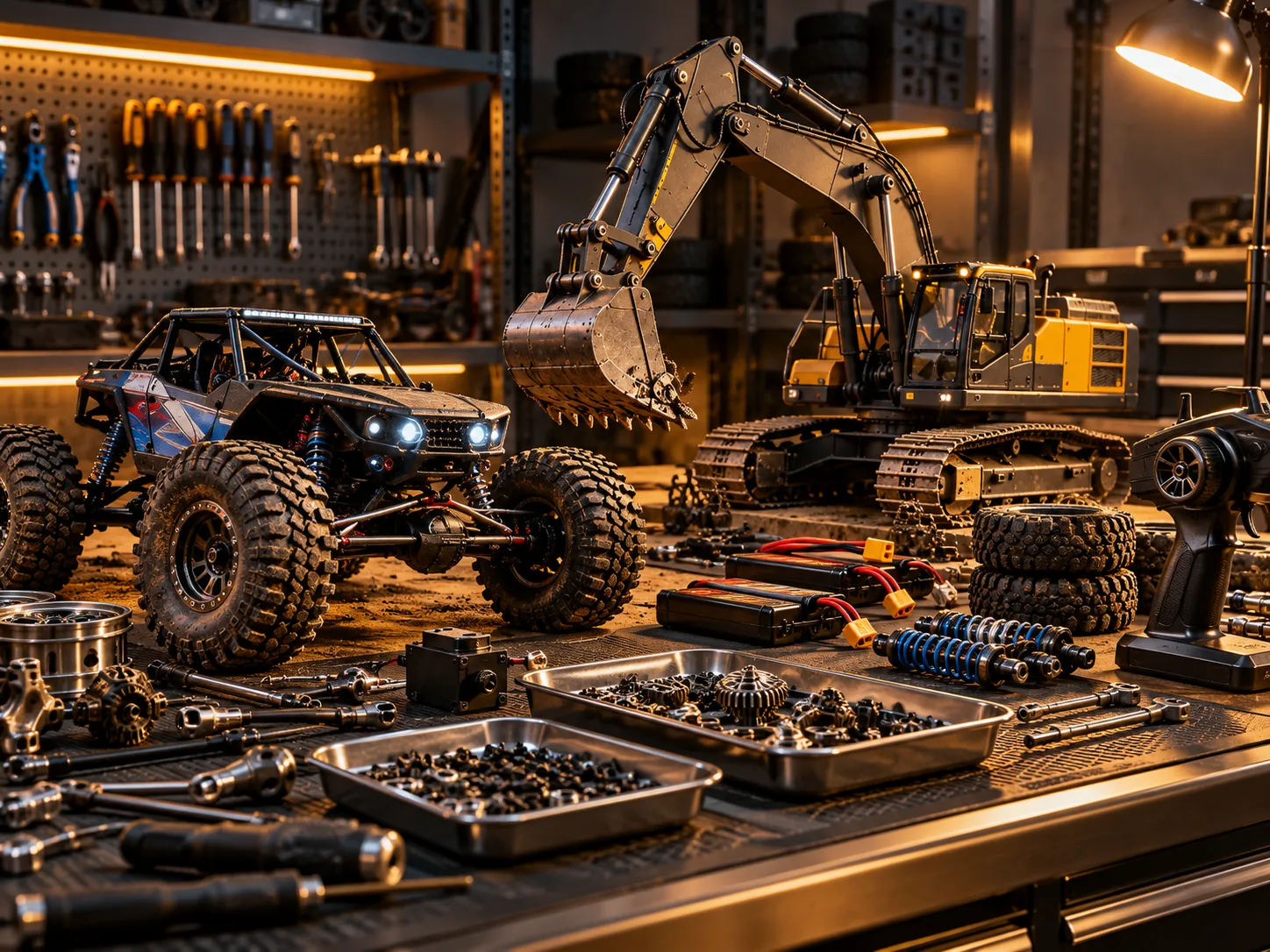 ILLUSTRATIVE EDITORIAL ARTWORK / NOT HANDS-ON TEST FOOTAGE
Nothing changes a crawler’s personality quite like the contact patch between its tires and the trail. That is why wheels and tires are such a popular early modification.
But there is a trap: bigger and stickier is not automatically better. Every change affects gearing, steering and the burden on the drivetrain.
Start with a baseline
Drive a repeatable obstacle course on your current tires. Photograph where the truck slips or rolls. Check tire wear, inserts and pressure or foam condition as appropriate for your setup.
This baseline gives you a real reason to upgrade, rather than a cart full of parts with no diagnosis.
What tire compound actually does
Soft compounds often improve grip on certain surfaces but can wear faster and behave differently in cold weather. Tread pattern matters for loose versus hard rock. Size matters for clearance and body fitment.
Tire inserts or foams can dramatically influence how well a tire conforms to irregular terrain. More sidewall flex is useful until it causes folding or instability.
The hidden cost of weight
Heavier wheels can lower the center of gravity but also increase rotating mass and stress components. On small-scale crawlers, extra grams are proportionally important.
Check axle compatibility, wheel hex size and clearance before buying. Never assume that every 1:24 part fits every 1:24 truck.
One modification at a time
Install, drive the same course and document what changed. It is slower than replacing every part at once—and much more satisfying when you can actually tell which upgrade worked.
Common questions before you commit
Do larger tires always crawl better? — No. Larger tires can improve clearance while creating body rubbing, gearing changes and more drivetrain load. Check exact diameter and fit.
Are heavier wheels a free performance boost? — No. Extra weight can change stability but also increases stress and rolling inertia. Make changes deliberately and document their effects.
Should I change suspension and tires together? — It is easier to learn from one change at a time. Drive a repeatable obstacle before and after tire installation before altering other variables.
How we put this guide together
RCVehicles.co is a research-led editorial site. We compare published product information, general hobby principles and marketplace listings. We have not physically tested or purchased the products linked in this article. Generated images are illustrative and should never be mistaken for product photography.
Compare before you commit.
Listings, variants and stock change. Read the seller’s specifications and check parts availability.
As an eBay Partner, we may earn a commission when you purchase through our links. Images are illustrative; check actual listings for details.
Browse relevant listings on eBayKEEP EXPLORING
 TRAIL GUIDE
Your First RC Rock Crawler: The Better Questions to Ask
The best beginning trail rig is the one you can drive, repair and enjoy on terrain near home.
READ THE GUIDE ↗MARKETPLACE FIELD NOTESBuying Used RC Vehicles on eBay: The 12-Point Inspection
How to spot a bargain, what to ask a seller, and when a “fully upgraded” model is a liability.
READ THE GUIDE ↗