A small cylinder painted like a hydraulic ram may hide a screw, a gear train or a genuine oil-powered system. The appearance tells you surprisingly little about how the machine drives. This is one of the most important distinctions in the hobby because it affects lifting behavior, repairability, sound, weight and cost.
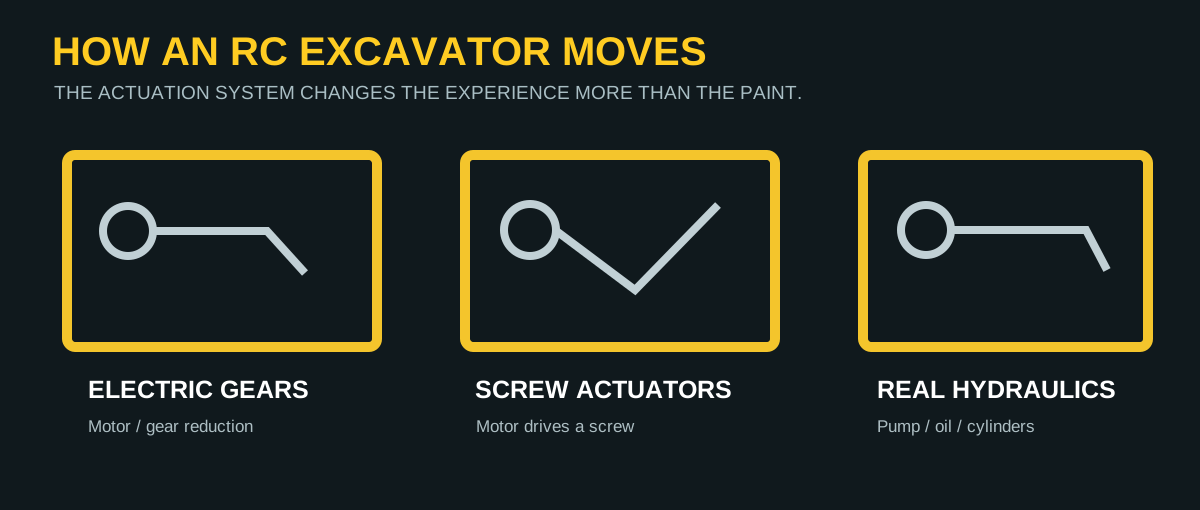
01. Three different ways to move a boom
Simplified construction toys use small electric motors and gear transmissions. More ambitious electric models use lead screws or geared actuators to push an arm with controlled travel. True hydraulic equipment uses an electric pump, fluid-filled hoses, valves and cylinders. These machines may all look similar from ten feet away, yet ownership is fundamentally different.
02. What electric machines do well
An electric setup can be relatively clean and accessible: a motor drives a mechanism without a fluid reservoir to service. Lower mechanical complexity can mean less mess, but gear wear, electrical faults and stripped plastic threads still happen. Judge a model by how smoothly the motion starts and stops under normal load rather than only by a seller’s channel count.
03. What real hydraulics add—and demand
Hydraulic RC machinery introduces oil, pressure, seals, valve adjustments and leak management. The appeal is the engineering experience and fluid movement under load. The tradeoff is more involved maintenance. Buyers should identify the pump, reservoir, controller, hose fittings and available service parts before purchasing anything called hydraulic.
04. The misleading “hydraulic arm” label
Many lower-cost listings call their arm hydraulic because its cylinders resemble a full-size excavator. Before buying, look for a photograph of the pump, oil tank, hoses and distribution valve. If those components are absent, do not assume the machine is oil hydraulic. Terms like “metal,” “professional,” and “23-channel” are not proof.
05. Serviceability is part of the purchase price
Buyers comparing a used premium electric excavator with a new hydraulic model should calculate more than the list price. Add batteries, chargers, leaks or seal kits, spare tracks, couplers and freight. The best purchase is one you can keep operating six months after an impressive unboxing, not simply the most complicated machine on day one.
Compare the relevant models
The table is a starting point for researching listings, not a live price feed. Always verify the exact generation, battery and package contents on the seller's page.
| MODEL | SCALE | TYPE | EBAY |
|---|---|---|---|
| Huina 1580 V5 | 1:14 | Premium electric excavator | Find listings |
| Huina 1594 | 1:14 | Large electric excavator | Find listings |
What to check before purchasing
Seller photographs, an accurate model number and a working demonstration are more reliable than promotional claims. Check batteries, spare parts, shipping cost and returns, especially on heavy construction equipment and extensively upgraded crawlers. We recommend a compatible charger and careful LiPo handling for all rechargeable models.
As an eBay Partner, we may earn a commission on qualifying purchases. Product illustrations are conceptual artwork, not photographs of the exact model. Specifications and seller inventories can differ by version.