RC Buggy or Short-Course Truck? Pick Your Kind of Chaos
Two very different ways to kick up dust—and a simple way to choose between them.
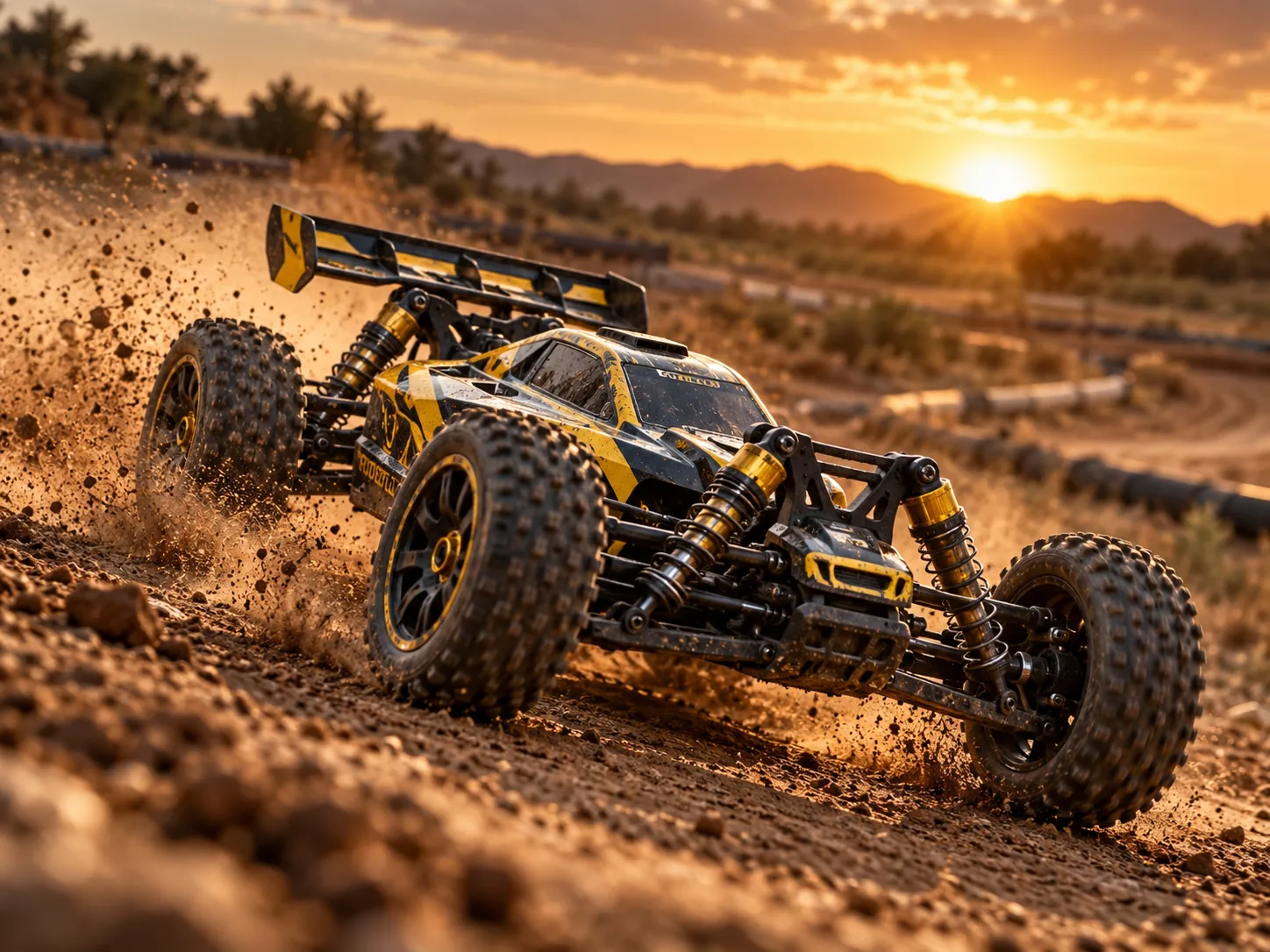 ILLUSTRATIVE EDITORIAL ARTWORK / NOT HANDS-ON TEST FOOTAGE
The best-looking RC vehicle isn’t necessarily the best match for your driving spot. Buggies and short-course trucks can overlap, but their dimensions, handling and bodywork create different experiences.
Buggies often emphasize exposed suspension and agility, while short-course trucks wrap the chassis in a fuller truck body. Real-world behavior depends on the individual model, not the label alone.
Where will you drive?
Hardpacked dirt, smooth outdoor tracks, rough grass and a street lot demand different tires and ground clearance. A compact buggy can be wonderfully lively on smooth dirt. A truck with protective bodywork may be more forgiving of some kinds of contact.
Before purchasing, walk the area and look at grass height, loose stones, curb edges and safe run-out space.
The repairability test
Spare suspension arms, gears and driveshafts matter more than hypothetical maximum speed. Search for replacement parts before selecting a model, especially an older used one.
Look closely at battery connectors and charging needs. A cheap purchase can become a costly setup when nothing in the box matches your existing equipment.
A first-day plan
Begin at partial throttle, practice figure-eights and controlled braking, inspect the vehicle after the first battery and tighten any loosened hardware to the manufacturer’s instructions.
If children or pets are nearby, stop running. Even small fast RC vehicles can cause injury.
The verdict
Choose the platform whose parts are easiest to source and whose terrain matches your real driving environment. If both fit, buy whichever makes you want to go outside more often.
Common questions before you commit
Which is easier to drive? — The exact model, tires and terrain matter more than a category label. Start in an open area at modest speed and build skill gradually.
Can I race a basher? — Some casual classes and club events allow mixed vehicles, but race regulations vary. Check the local club rules before purchasing specifically for competition.
Why check replacement parts before buying? — Suspension arms, gears, shock components and wheels are wear items. Ready access to compatible spares can save more time and expense than a bargain price.
How we put this guide together
RCVehicles.co is a research-led editorial site. We compare published product information, general hobby principles and marketplace listings. We have not physically tested or purchased the products linked in this article. Generated images are illustrative and should never be mistaken for product photography.
Compare before you commit.
Listings, variants and stock change. Read the seller’s specifications and check parts availability.
As an eBay Partner, we may earn a commission when you purchase through our links. Images are illustrative; check actual listings for details.
Browse relevant listings on eBayKEEP EXPLORING
 SHOP SAFETY
RC Batteries: The Boring Checklist That Saves Your Weekend
Connectors, chemistry, charging, storage and the simple checks that matter across every vehicle category.
READ THE GUIDE ↗ THE JOBSITE EDITION
The RC Construction Machines Worth Comparing in 2026
From electric diggers to full miniature earthmoving fleets: what actually matters before you buy.
READ THE GUIDE ↗